Annunciation of the Lord to Mary

Happy Solemnity of the Annunciation of the Lord to Mary.

The Vatican II document, Lumen gentium, says: ‘At the message of the angel, the Virgin Mary received the Word of God in her heart and in her body, and gave Life to the World. Hence she is acknowledged and honoured as being truly the Mother of God and Mother of the Redeemer.’ (Lumen gentium 52).

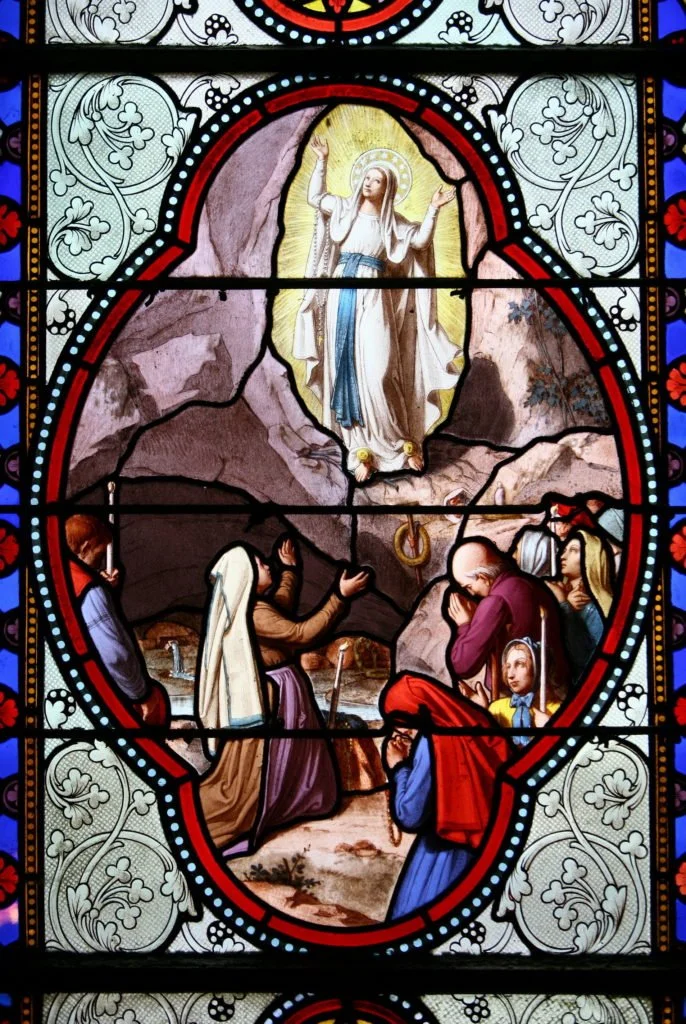
It was also on the 25 March in 1858 that the Lady finally revealed her name. As Bernadette recounted: “She raised her eyes to the sky, joining in a sign of prayer her hands which were outstretched and open towards the earth, and said to me: ‘I am the Immaculate Conception’"

Our Lady of Lourdes, pray for us.

Guest User
Lent 2025

Ash Wednesday sees the beginning of the season of Lent.

Pope Francis has asked each of us to follow the theme: "Let us journey together in hope”. Here is his full message:

MESSAGE OF HIS HOLINESS POPE FRANCIS FOR LENT 2025

Let us journey together in hope

Dear brothers and sisters,

We begin our annual pilgrimage of Lent in faith and hope with the penitential rite of the imposition of ashes. The Church, our mother and teacher, invites us to open our hearts to God’s grace, so that we can celebrate with great joy the paschal victory of Christ the Lord over sin and death, which led Saint Paul to exclaim: “Death has been swallowed up in victory. Where, O death, is your victory? Where, O death, is your sting?” ( 1 Cor 15:54-55). Indeed, Jesus Christ, crucified and risen, is the heart of our faith and the pledge of our hope in the Father’s great promise, already fulfilled in his beloved Son: life eternal (cf. Jn 10:28; 17:3). [1]

This Lent, as we share in the grace of the Jubilee Year, I would like to propose a few reflections on what it means to journey together in hope, and on the summons to conversion that God in his mercy addresses to all of us, as individuals and as a community.

First of all, to journey. The Jubilee motto, “Pilgrims of Hope”, evokes the lengthy journey of the people of Israel to the Promised Land, as recounted in the Book of Exodus. This arduous path from slavery to freedom was willed and guided by the Lord, who loves his people and remains ever faithful to them. It is hard to think of the biblical exodus without also thinking of those of our brothers and sisters who in our own day are fleeing situations of misery and violence in search of a better life for themselves and their loved ones. A first call to conversion thus comes from the realization that all of us are pilgrims in this life; each of us is invited to stop and ask how our lives reflect this fact. Am I really on a journey, or am I standing still, not moving, either immobilized by fear and hopelessness or reluctant to move out of my comfort zone? Am I seeking ways to leave behind the occasions of sin and situations that degrade my dignity? It would be a good Lenten exercise for us to compare our daily life with that of some migrant or foreigner, to learn how to sympathize with their experiences and in this way discover what God is asking of us so that we can better advance on our journey to the house of the Father. This would be a good “examination of conscience” for all of us wayfarers.

Second, to journey together. The Church is called to walk together, to be synodal. [2] Christians are called to walk at the side of others, and never as lone travellers. The Holy Spirit impels us not to remain self-absorbed, but to leave ourselves behind and keep walking towards God and our brothers and sisters. [3] Journeying together means consolidating the unity grounded in our common dignity as children of God (cf. Gal 3:26-28). It means walking side-by-side, without shoving or stepping on others, without envy or hypocrisy, without letting anyone be left behind or excluded. Let us all walk in the same direction, tending towards the same goal, attentive to one another in love and patience.

This Lent, God is asking us to examine whether in our lives, in our families, in the places where we work and spend our time, we are capable of walking together with others, listening to them, resisting the temptation to become self-absorbed and to think only of our own needs. Let us ask ourselves in the presence of the Lord whether, as bishops, priests, consecrated persons and laity in the service of the Kingdom of God, we cooperate with others. Whether we show ourselves welcoming, with concrete gestures, to those both near and far. Whether we make others feel a part of the community or keep them at a distance. [4] This, then, is a second call to conversion: a summons to synodality.

Third, let us journey together in hope, for we have been given a promise. May the hope that does not disappoint (cf. Rom 5:5), the central message of the Jubilee, [5] be the focus of our Lenten journey towards the victory of Easter. As Pope Benedict XVI taught us in the Encyclical Spe Salvi, “the human being needs unconditional love. He needs the certainty which makes him say: ‘neither death, nor life, nor angels, nor principalities, nor things present, nor things to come, nor powers, nor height, nor depth, nor anything else in all creation, will be able to separate us from the love of God in Christ Jesus our Lord’ ( Rom 8:38-39)”. [6] Christ, my hope, has risen! [7] He lives and reigns in glory. Death has been transformed into triumph, and the faith and great hope of Christians rests in this: the resurrection of Christ!

This, then, is the third call to conversion: a call to hope, to trust in God and his great promise of eternal life. Let us ask ourselves: Am I convinced that the Lord forgives my sins? Or do I act as if I can save myself? Do I long for salvation and call upon God’s help to attain it? Do I concretely experience the hope that enables me to interpret the events of history and inspires in me a commitment to justice and fraternity, to care for our common home and in such a way that no one feels excluded?

Sisters and brothers, thanks to God’s love in Jesus Christ, we are sustained in the hope that does not disappoint (cf. Rom 5:5). Hope is the “sure and steadfast anchor of the soul”. [8] It moves the Church to pray for “everyone to be saved” ( 1 Tim 2:4) and to look forward to her being united with Christ, her bridegroom, in the glory of heaven. This was the prayer of Saint Teresa of Avila: “Hope, O my soul, hope. You know neither the day nor the hour. Watch carefully, for everything passes quickly, even though your impatience makes doubtful what is certain, and turns a very short time into a long one” ( The Exclamations of the Soul to God, 15:3). [9]

May the Virgin Mary, Mother of Hope, intercede for us and accompany us on our Lenten journey.

Rome, Saint John Lateran, 6 February 2025

Memorial of St Paul Miki and Companions, martyrs.

FRANCIS

__________________________

[1] Cf. Encyclical Letter Dilexit Nos (24 October 2024), 220 . ‍

[2] Cf. Homily for the Mass and Canonization of Giovanni Battista Scalabrini and Artemide Zatti, 9 October 2022. ‍

[3] Ibid. ‍

[4] Ibid.

[5] Cf. Bull Spes Non Confundit , 1. ‍

[6] Encyclical Letter Spe Salvi (30 November 2007), 26. ‍

[7] Cf. Easter Sequence.

[8] Cf. Catechism of the Catholic Church , 1820.

[9] Ibid, 1821.

Source: vatican.va

This Lent, let us pray for each other and Pope Francis.
Guest User
Opening of the Lourdes February Days

« With Mary, pilgrims of hope »

“Hope is the theological virtue by which we desire the Kingdom of heaven and eternal Life, as our happiness, placing our trust in Christ's promises and relying, not on our own strength, but on the help of the grace of the Holy Spirit” (CCC 1817).

This is what is stated in the Catholic Catechism. It's all there, beautifully distilled into a few words. Hope is that ability of a believer to look up into God's heavens and yearn for it as a priceless treasure—a treasure that Christ promises us and that the Holy Spirit supports us in pursuing despite all obstacles. In the Letter to the Romans, chap. 4 vers. 18, Paul says of Abraham: “In hope he believed against hope, that he should become the father of many nations, as he had been told, “So shall your offspring be.”. Hoping against hope. The entire Old Testament will shape, prepare, and test this attitude.

In the end, what is promised is joy, a joy that nothing and no one can take away from those who find it (Jn. 16:22). Saint Augustine puts it beautifully: "You have made us for yourself, Lord, and our hearts are restless until they rest in you.

The CCC at no. 1818 puts it this way:

CCC 1818: The virtue of hope responds to the aspiration to happiness which God has placed in the heart of every man; it takes up the hopes that inspire men's activities and purifies them so as to order them to the Kingdom of heaven; it keeps man from discouragement; it sustains him during times of abandonment; it opens up his heart in expectation of eternal beatitude. Buoyed up by hope, he is preserved from selfishness and led to the happiness that flows from charity.

It's amazing, and we won’t have enough time to explore this completely during a pilgrimage to Lourdes or even during a jubilee year.‘

‘With Mary, pilgrims of hope’

This year, the Sanctuary invites pilgrims to become “pilgrims of hope, with Mary,” entering at the same time into the dynamics of the universal Church, and I have decreed that this Sanctuary will be a place where pilgrims can receive the plenary indulgence offered during the jubilee, and to enter into this dynamic of the universal Church in the grace proper to this place blessed by Heaven.

Becoming "Pilgrims of Hope" means deciding to embark on a journey in a specific manner, guided by the theological virtue of hope. Travelling because God loves us as we depend on Him every day as nomads, pilgrims, and unsettled people. I love saying and repeating it! Put your faith in a word that God gives you, just like Abraham did in the past. Setting out through the desert, led by a very mysterious cloud, just like the ancient Hebrews did with Moses, towards a land that flowed with milk and honey...

Setting out. The symbolism is powerful. There are great internal and external impacts for each of us. Setting out means accepting a degree of uncertainty, discomfort and deprivation. Setting out on a journey, because God wants to be our only Providence, and to put an end to our tendency to always centre everything on ourselves. We must set out to be poor at heart, so that the Holy Spirit can cry out to God and call him “Abba!” To set out to learn from him the way to heaven. Becoming “Pilgrims of Hope” means setting out with a heart full of love, desire, and trust: Christ promises eternal life and the Kingdom of Heaven, and the Holy Spirit gives us the grace to desire it. Accepting these things will bring us happiness.

With Mary, in this Jubilee Year, pilgrims to Lourdes will become pilgrims of hope. Here in Lourdes, the Mother of God welcomes us and accompanies our every step as pilgrims. Here in Lourdes, Mary consoles all our sorrows, supports all our hopes and welcomes all our joys. Here in Lourdes, Mary comes to earth, and she smiles at us. Her smile conveys God's tenderness, as He becomes the travelling companion of the Emmaus pilgrims, who are all of us – sometimes blind, sometimes with burning hearts, sometimes discouraged and sometimes with wide-open eyes. Here in Lourdes, pilgrims find the strength to continue their journey with the Lord, the journey of their vocations, and the journey of their lives – this journey, which is ours, is sometimes difficult, not always straight, but always accompanied by God.

Mary is the Mother of God. She welcomed the work of the Holy Spirit and became the mother of Christ, Son of God and God himself. It was she who visited Bernadette at the Grotto of Massabielle. It is she whom we solemnly visit in this place. It is she who welcomes us again and again, and leads us to her Son, the Saviour of the world, the Prince of Peace. Mary is our sister in faith, the Mother of God and also our heavenly Mother. The Lord worked wonders for her. The Lord does and will always do great things for us.

Have a wonderful time over these Lourdes February Days! May all the meetings, conferences and celebrations help you to accompany our visitors and pilgrims on the path of Christian hope, supported by the Immaculate Conception and the prayers of Saint Bernadette!

Mgr. Jean-Marc Micas

Bishop of Tarbes et Lourdes

Guest UserComment
Hospitalité AGM

The Catholic Association Hospitalité AGM will take place on Saturday the 29th March at 11:30 am and will be held at Stonyhurst College. Lunch will be provided afterwards courtesy of Stonyhurst Association.

A tour of the Stonyhurst Museum collections can be arranged at an extra cost of £10pp and takes approximately one hour. The exact timing will be arranged nearer the date when we know how many people wish to attend. (Pre-registration required)

Bed and breakfast accommodation is available at Theodore House which is adjacent to Stonyhurst College.

Please contact Theodore House directly to book accommodation and express a preference should you require an evening meal on Saturday 29th March. bookings@theodorehouse.com or www.theodorehouse.com

Registration for the AGM and museum tour bookings can be made via the link here.

Please note that bookings will close on Tuesday 25 March 2025.

Guest User